Most roof leaks in South Florida start small. A cracked tile, a lifted shingle, a seam on a flat roof that opened up after a long summer of sun. By the time water shows up on a ceiling, the damage underneath has usually been building for months. A simple roof inspection checklist gives you a way to catch those problems while they are still cheap to fix.
This guide is written for homeowners in Hollywood, Fort Lauderdale, Pembroke Pines, Miami, Boca Raton, and the rest of Miami-Dade, Broward, and Palm Beach counties. You will learn what you can safely check yourself from the ground and the attic, what to look for after a storm, how often a roof should be inspected in Florida, and what a professional roof inspection adds that a walk around the yard cannot. We also cover how a roof inspection differs from the 4 point and wind mitigation inspections your insurance company may ask for.
Keep this page bookmarked, because the roof inspection checklist works best when you repeat it. Run through it before hurricane season, after every major storm, and any time something about your roof looks or smells off.
In This Article:
- Why Florida roofs need a roof inspection checklist
- How often should a roof be inspected in Florida?
- Ground level roof inspection checklist
- What to check on your roof after a storm
- What a professional roof inspection covers
- Roof inspection vs. 4 point and wind mitigation
- Roof maintenance checklist for every season
- Roof inspection FAQs
- When to call a roofing contractor in Hollywood FL
Why Florida roofs need a roof inspection checklist
A roof in Ohio and a roof in Davie may use the same shingles, but they do not live the same life. In addition to intense UV exposure most of the year, South Florida roofs deal with daily summer downpours, salt air near the coast, and a hurricane season that runs from June 1 through November 30. Each of those wears a roof down in its own way.
UV breaks down asphalt and dries out sealants. Heavy rain finds every gap in flashing. Salt air speeds up corrosion on metal panels, fasteners, and vent flashing in coastal areas like Hollywood Beach and Aventura. Wind lifts shingle edges and loosens tiles, and the uplift does not have to be hurricane force to do it. A strong afternoon thunderstorm can do it.
Code requirements raise the stakes too. Miami-Dade and Broward counties sit inside the Florida Building Code‘s High-Velocity Hurricane Zone (HVHZ), which carries stricter rules for roofing materials and installation than most of the country. When a roof fails here, the repair or replacement has to meet those standards, so small problems left alone tend to turn into bigger, more expensive projects.
Insurance is the other pressure point. Florida insurers look closely at roof age and condition when writing or renewing policies. A roof with visible wear, missing tiles, or old patch work can affect your coverage options. A regular roof inspection checklist helps you see those issues before an insurance inspector does.
How often should a roof be inspected in Florida?
For most homes in South Florida, a good rhythm looks like this:
- A quick homeowner check from the ground twice a year, once in spring before hurricane season and once in late fall after it ends.
- A professional roof inspection once a year, ideally before June.
- An extra check after any named storm, hailstorm, or wind event strong enough to drop branches in your yard.
- An inspection before you buy or sell a home, and when your insurance company asks for one.
Roof age changes the schedule. A newer roof installed to current code may only need the annual visit. A shingle roof that is getting older, or a tile roof that has been through several hurricane seasons, deserves closer attention because problems develop faster and cost more to ignore.
Commercial buildings, condo associations, and HOAs usually benefit from a written inspection schedule. Flat and low slope roofs on commercial properties in Fort Lauderdale or Miami hold water, collect debris, and carry rooftop equipment that gets serviced by other trades, so there is more foot traffic and more chances for damage. Twice yearly professional inspections are common for those buildings. Our commercial roofing team can help property managers set up a schedule that fits the building.
Ground level roof inspection checklist
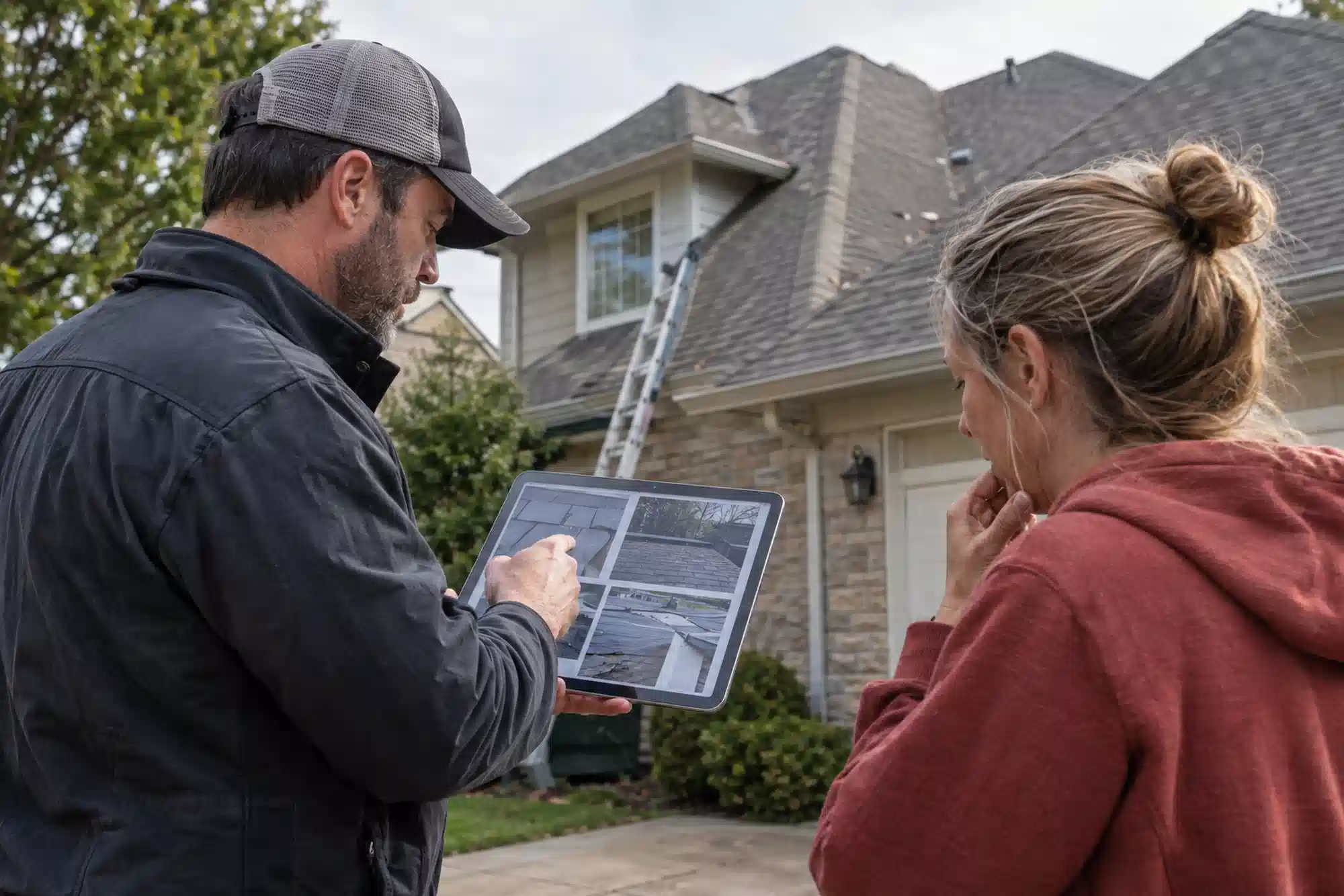
You do not need to climb onto your roof to learn a lot about it. In fact, you should not. Tile breaks under foot traffic when you step in the wrong spot, wet shingles and metal are slippery, and falls from roofs cause serious injuries every year. Stay on the ground and use binoculars or the zoom on your phone camera, then walk the full perimeter of the house. If you use a ladder, stay at the gutter line and only look.
Start with the items that apply to every roof:
- Sagging or wavy sections along the ridge or roof planes
- Missing, cracked, or shifted roofing material
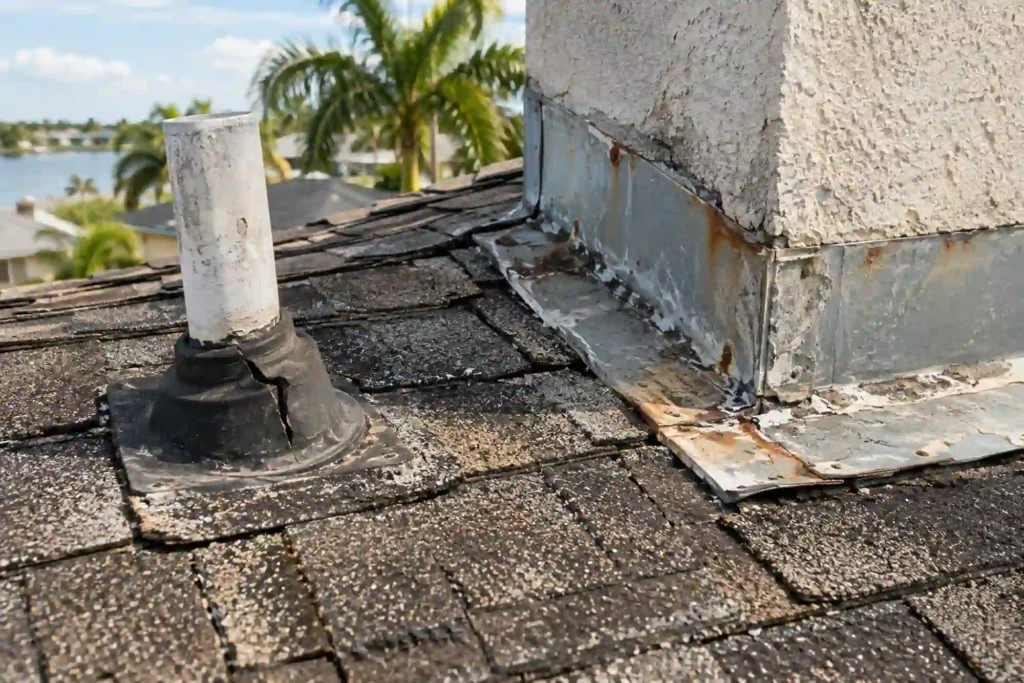
- Rust, gaps, or lifted edges on flashing around chimneys, walls, skylights, and vents
- Pipe boots and vent collars that look cracked or pulled away
- Gutters that are clogged, pulling away from the fascia, or overflowing during rain
- Stained, soft, or rotted fascia and soffit boards
- Tree branches touching or hanging over the roof
- Dark streaks, moss, or algae, especially on north facing slopes that stay damp
Then look at the details specific to your roof type.
Shingle roofs
Look for curled, cupped, or cracked shingles, and check whether any tabs are lifted or creased. A crease line across a shingle usually means wind bent it back, which can break the seal strip even if the shingle settled back down. Check your gutters and downspout splash areas for granules. Heavy granule loss matters because the sun hits bare asphalt, and it ages faster. Bare patches or shiny spots on the roof tell the same story.
Tile roofs
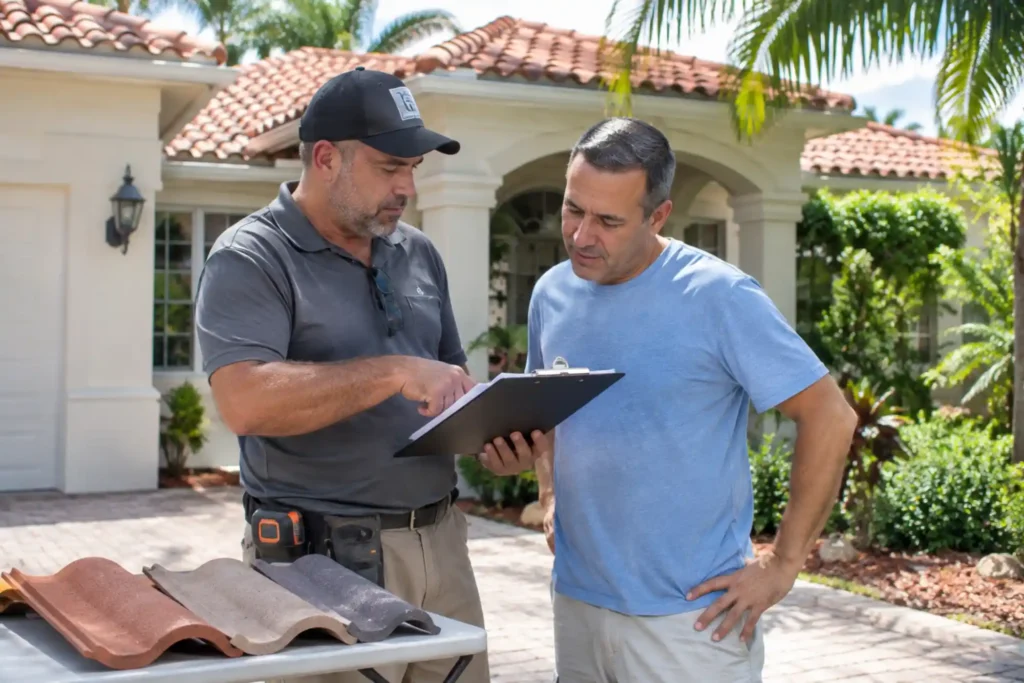
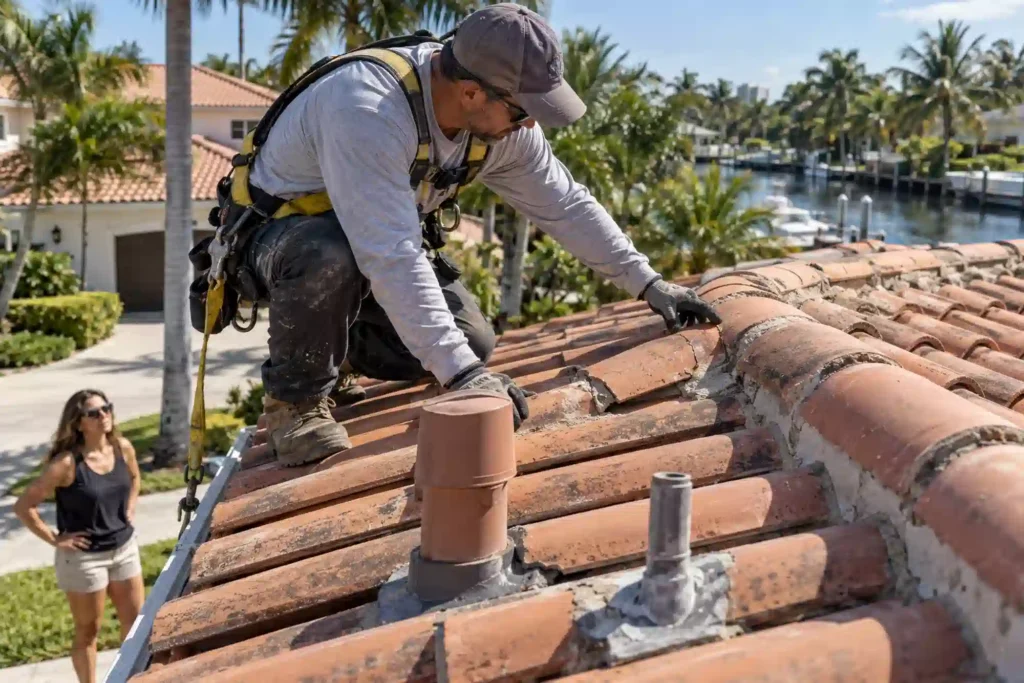
Concrete and clay tile roofs are common across Broward and Miami-Dade, and they last a long time when the underlayment beneath them stays in good shape. From the ground, look for cracked, chipped, slipped, or missing tiles. Check the ridge and hip lines for cracked or missing mortar or loose ridge caps. Tiles that look out of line with their neighbors may have broken fasteners or failed adhesive. Remember that the tile itself is mostly a protective layer. The underlayment does most of the waterproofing and you cannot see it from the yard, so tile roofs benefit from professional inspections. If you are already seeing broken tile, our roof repair crews can replace tiles and check the underlayment beneath them.
Metal roofs
Because metal roofs shed water at fasteners and seams, look for screws that have backed out, rust around fasteners or panel edges, and laps where sealant has dried and cracked. Dents from debris matter less than open seams, because seams let water in. On homes near the water, pay extra attention to corrosion along the eaves and around flashing, where salt spray collects first.
Flat and low slope roofs
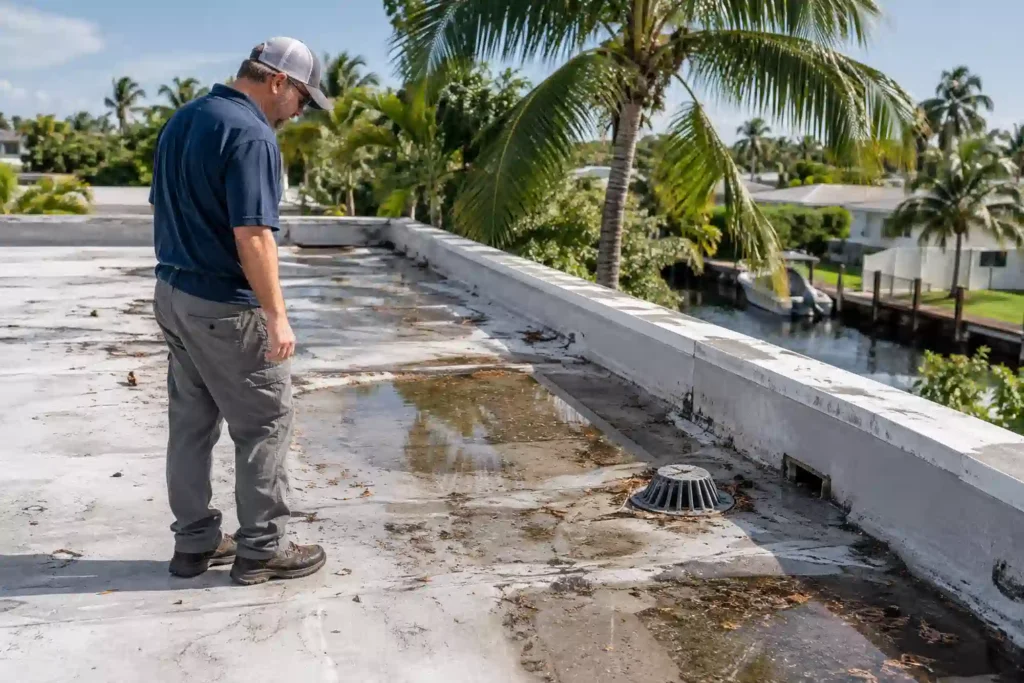
Flat roofs are harder to see from the ground, so check them from a window or balcony that overlooks them if you can. Look for standing water that remains a couple of days after rain, blisters or bubbles in the membrane, cracks or splits, and seams that are lifting. Make sure scuppers and drains are clear. Water that stays on a flat roof adds weight and finds the weakest seam over time.
Check the attic and ceilings
The inside of your home often shows roof problems before the outside does. On a dry, sunny day, take a flashlight into the attic and look for:
- Daylight coming through the roof deck
- Water stains, dark spots, or soft areas on the underside of the decking
- Damp or compressed insulation
- Rusty nail tips poking through the deck, which often points to condensation or a slow leak
- A musty smell or visible mold
Inside the living space, check ceilings and the tops of walls for brown rings, bubbling paint, or peeling drywall tape, especially near exterior walls, skylights, and bathroom vents.
What to check on your roof after a storm
After a hurricane or a strong storm passes through Hollywood, Miami, or West Palm Beach, wait until the weather clears and it is safe to go outside. Watch for downed power lines and do not go on the roof. Then work through this post storm list:
- Walk the yard and look for pieces of shingle, tile, metal trim, or flashing on the ground. Debris in the yard is often the first sign of roof damage.
- Scan every roof slope for missing or shifted material, exposed underlayment, and lifted edges.
- Check for branches or debris sitting on the roof and note any impact points.
- Look at gutters and downspouts for damage or separation from the house.
- Go into the attic with a flashlight and look for active drips, wet decking, or soaked insulation.
- Check ceilings in every room for new stains or sagging drywall.
- Photograph everything, with date stamps, from several angles. Take wide shots and close ups.
If you find an active leak, move belongings away from it, catch the water, and call a roofer for an emergency tarp or temporary repair. Covering the damage quickly limits how much water gets into the structure. Insurers also expect homeowners to take reasonable steps to prevent further damage.
Contact your insurance company promptly. Florida has tightened the time limits for reporting property insurance claims in recent years, so check your policy and do not wait. A written report and photos from a licensed roofing contractor also give your claim a clear record of what the storm did. You can confirm any contractor’s license through the state’s DBPR license search. You can also follow storm forecasts through the National Hurricane Center.
What a professional roof inspection covers
A homeowner check catches the obvious. A professional roof inspection gets into the parts you cannot safely see or judge from the ground. A trained inspector knows where each roof type tends to fail, how to walk tile without breaking it, and what normal wear looks like compared with a problem that needs attention now.
A thorough inspection from a roofing contractor typically includes:
- A close look at every roof plane, ridge, hip, and valley
- Condition of the roofing material, including loose, broken, or failing pieces
- Flashing at walls, chimneys, skylights, and roof to wall transitions
- Pipe boots, vents, and any rooftop equipment curbs
- Signs of underlayment failure on tile roofs, such as staining or deterioration visible at broken tiles or edges
- Seams, drains, and membrane condition on flat roofs
- Soft spots in the decking
- Gutters, drip edge, fascia, and soffit
- Attic ventilation, decking, and signs of moisture inside
What the inspection report should include
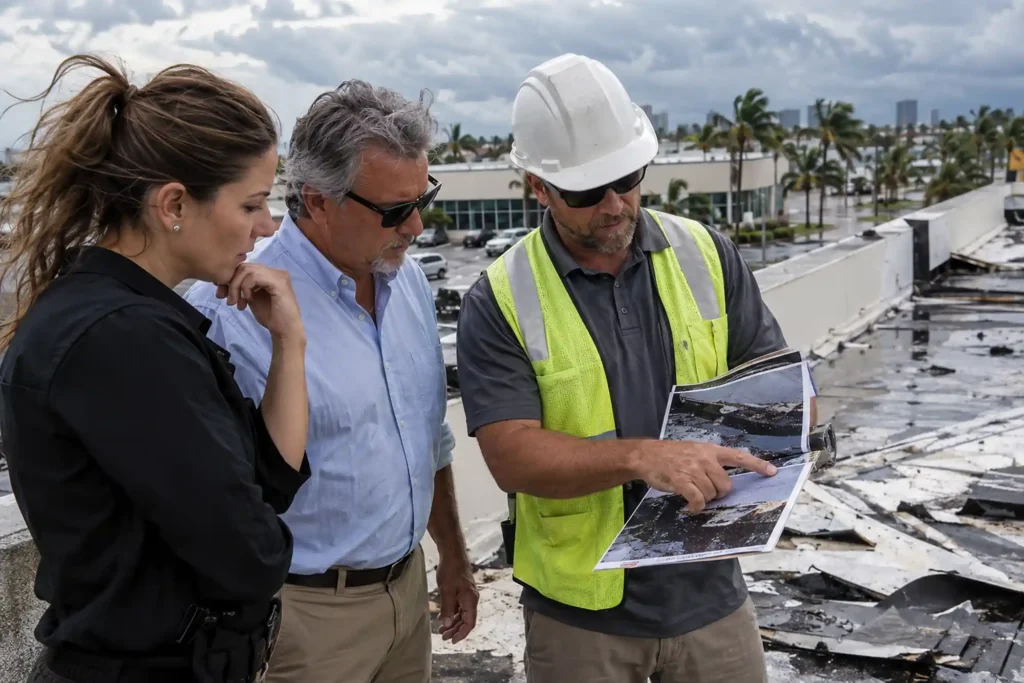
A good report is something you can act on and hand to an insurer, buyer, or HOA board. It should include photos of each issue with its location on the roof, the roof type and an estimate of its age, and a description of each defect. It should also rank recommended repairs by urgency and give an honest view of the roof’s remaining service life. If the inspector recommends replacement, the report should explain why repair is no longer a good investment.
That last point matters. A trustworthy contractor will tell you when a repair makes sense and when it would only delay a roof replacement you are going to need anyway. With 25+ years of roofing work across South Florida, our team gives homeowners a straight answer either way.
Roof inspection vs. 4 point and wind mitigation
Florida homeowners hear about three kinds of inspections, and they are easy to mix up.
Roof inspection
A roof inspection focuses only on the roof system and its condition. Its job is to find damage, wear, and leaks, and to recommend repairs or replacement. It is the most detailed look at the roof of the three.
4 point inspection
A 4 point inspection is an insurance document. It covers four systems: roof, electrical, plumbing, and HVAC. Insurers often ask for one on older homes, though the age cutoff varies by company. The roof section usually records the roof covering, its approximate age, its condition, and any visible damage or leaks. It is a snapshot for underwriting, not a repair plan.
Wind mitigation inspection
A wind mitigation inspection documents features that help a home resist wind damage. It is recorded on the state’s uniform mitigation form, which is published by the Florida Office of Insurance Regulation. The inspector notes the roof covering, how the roof deck is attached, how the roof connects to the walls, the roof shape, any secondary water barrier, and opening protection like impact windows or shutters. Those features can qualify you for premium discounts.
If your roof is in rough shape, fix it before scheduling a 4 point or wind mitigation inspection. A roof inspection first lets you deal with problems on your terms.
Roof maintenance checklist for every season
Inspection tells you what is wrong. Maintenance keeps the list short. Use this roof maintenance checklist through the year.
Spring, before hurricane season
- Schedule your annual professional roof inspection
- Clean gutters, downspouts, and flat roof drains
- Trim branches back from the roof
- Repair loose tiles, lifted shingles, and worn sealant
- Photograph the roof so you have a before record if a storm hits
Summer, during peak storm months
- Check ceilings and the attic after heavy rain
- Clear leaves and debris from valleys and gutters after storms
- Keep a roofer’s number and your insurance information handy
Fall, after hurricane season
- Do a full ground level check and attic check
- Look for damage from the season’s storms, even if none hit directly
- Schedule repairs before small issues spread
Winter, during the dry season
- Plan larger work like re-roofing during the drier months, when scheduling is often easier
- Review your roof’s age and condition against your insurance renewal date
- Look into roof financing if a replacement is coming
Roof inspection FAQs
Can I inspect my roof without walking on it?
Yes, and you should. Walk the perimeter of your home with binoculars or your phone’s zoom, then check the gutters for granules and debris, and look at the attic and ceilings from inside. That covers a lot of a roof inspection for homeowners. Leave walking the roof to a professional, especially on tile, metal, or steep roofs.
What should a roof inspection report include?
It should list the roof type and approximate age, the condition of the covering, flashing, vents, and drainage, photos of every issue with its location, recommended repairs ranked by priority, and an estimate of remaining service life. A good report is clear enough to share with an insurer or buyer.
Is a roof inspection the same as a 4 point inspection?
No. A 4 point inspection is an insurance form that covers the roof, electrical, plumbing, and HVAC at a high level. A roof inspection looks at the roof in much more detail and focuses on finding and fixing problems.
What belongs on a roof maintenance checklist?
Clean gutters and drains, trim overhanging branches, replace broken tiles or lifted shingles, reseal flashing and vents as they wear, check the attic after heavy rain, and schedule a professional inspection every year before hurricane season.
Do I need a roof inspection after every storm?
Do your own ground and attic check after every significant storm. Call a professional if you find missing material, debris impacts, or signs of water inside, or if the storm brought hurricane force winds to your area.
When to call a roofing contractor in Hollywood, FL
Your roof inspection checklist will flag some things you can handle, like cleaning gutters or trimming a tree. Other findings need a licensed roofer right away: an active leak, missing or broken roofing material, sagging, stains in the attic, or any damage after a storm. Waiting on those gives water time to reach the deck, insulation, and drywall.
The checks in this guide give you an early warning system. Walk the property twice a year, look in the attic after heavy rain, and do a full pass after every storm. Pair this roof inspection checklist with a yearly professional roof inspection, and you will catch most problems while they are still small repairs instead of a full replacement. Keep your photos and reports on file for insurance and resale.
Victory E&I Roofing is a licensed and insured South Florida roofing company based in Hollywood, serving homeowners and businesses across Miami-Dade, Broward, and Palm Beach counties. We inspect, repair, and replace tile, shingle, metal, and flat roofs, and we offer financing for larger projects. If your checklist turned up something that worries you, or it has been more than a year since anyone looked at your roof, contact our team to schedule a professional roof inspection.