If you are comparing clay vs concrete tile for a South Florida roof, the material you pick decides how many times you replace it. A well installed clay tile roof commonly lasts 50 to 100 years here. A well installed concrete tile roof commonly lasts 30 to 50 years. Both numbers assume correct installation for our wind zone and basic maintenance, because installation and upkeep matter almost as much as the tile itself.
We get this question on nearly every tile estimate we run across Miami-Dade, Broward, and Palm Beach counties. It usually comes from a homeowner comparing quotes or a property manager planning an HOA reroof budget. This guide covers how each material performs in our climate and what drives the cost difference. It also explains why wind performance comes down to installation, and how to decide which tile fits your property.
In This Article:
- How long clay tile lasts
- How long concrete tile lasts
- Why South Florida ages tile faster
- Clay vs concrete tile costs
- Installation matters more than material
- What really determines roof lifespan
- Signs your tile roof needs attention
- Choosing clay or concrete tile
- Frequently asked questions
How long clay tile lasts
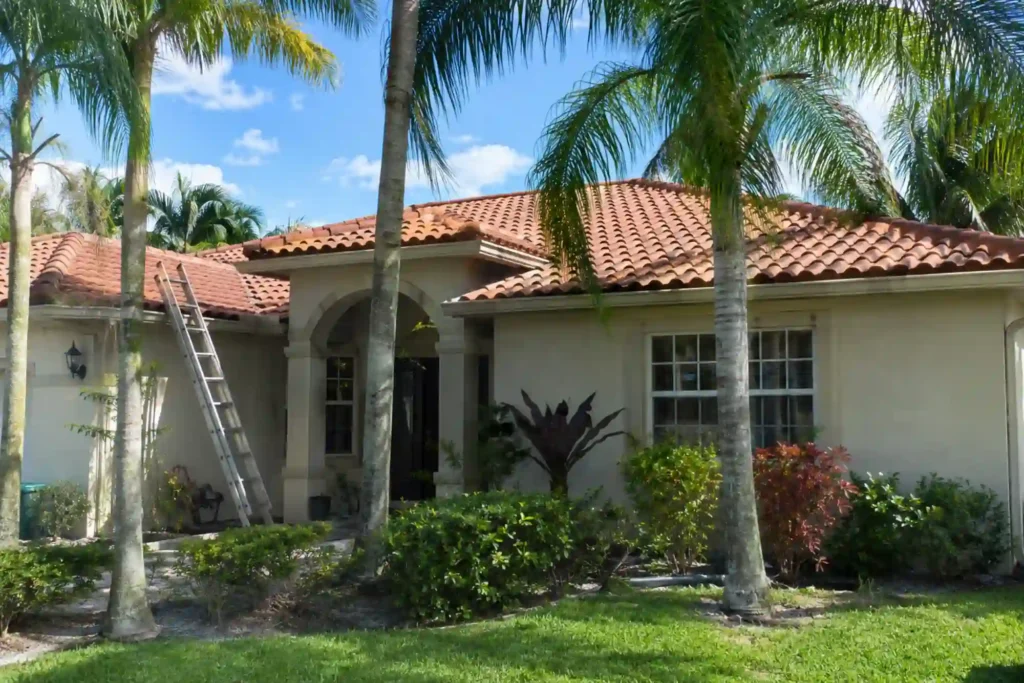
Clay tile is fired at high heat, and the color runs through the whole tile. There is no surface coating to fade, flake or wear through. That is the main reason a clay roof in Weston or Coral Gables can still look close to new after three or four decades. Glazed clay also resists water absorption, which matters because a South Florida roof stays damp for days after summer storms.
Properly installed and maintained, clay tile roofs in this market commonly reach the 50 year mark. We have worked on clay roofs well past that, including older Mediterranean style homes around Coral Gables and Fort Lauderdale. The tile itself tends to outlast the roofing system underneath it. When a clay tile roof does need work, the underlayment or flashing has usually failed, not the clay.
Clay tile also resists the UV breakdown that eats away at painted or coated surfaces. South Florida gets strong sun all year, and that adds up fast on a roof. The tradeoff is price. Clay tile costs more per square than concrete, for both the material and the labor. Clay is brittle, so it cracks more easily during installation if the crew lacks experience with it. If you plan to stay for decades, the higher upfront number often means a lower cost per year of roof life. The odds of a second full replacement are much lower.
How long concrete tile lasts
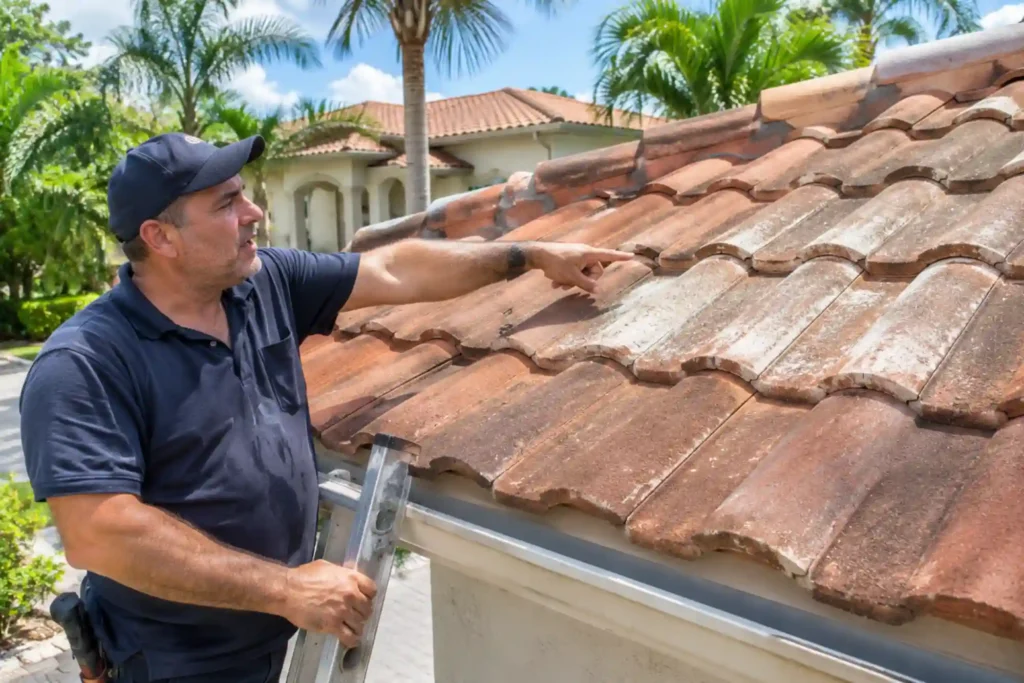
Concrete tile is cast rather than fired, and the color comes from a surface coating or a pigment mixed into the concrete. Either way, that surface sits more exposed to UV breakdown than fired clay does. Over fifteen to twenty-five years, you will usually see fading and a chalky white mineral buildup called efflorescence. That does not mean the roof is failing. It is one of the clearest differences in a clay vs concrete tile comparison.
Concrete is also more porous than clay, so it absorbs more moisture. In a climate this humid, that shows up as algae growth and gradual color loss. Over enough years, repeated wet and dry cycles can also cause small surface cracks. Most concrete tile roofs we service across Miami-Dade and Broward hold up well for 30 to 50 years. After that, the roofing system beneath needs a full replacement. Individual tiles often outlast that window if foot traffic or impact never cracks them.
The upside is cost. Concrete tile typically runs less than clay for the same square footage, in both material and labor. That makes it the common choice for homeowners who want a tile look and wind performance without clay pricing. Concrete also comes in more profiles and colors, including flat styles that mimic slate and curved styles that mimic barrel clay. A recoat around the fifteen to twenty year mark can restore the color and buy additional years.
Why South Florida ages tile faster
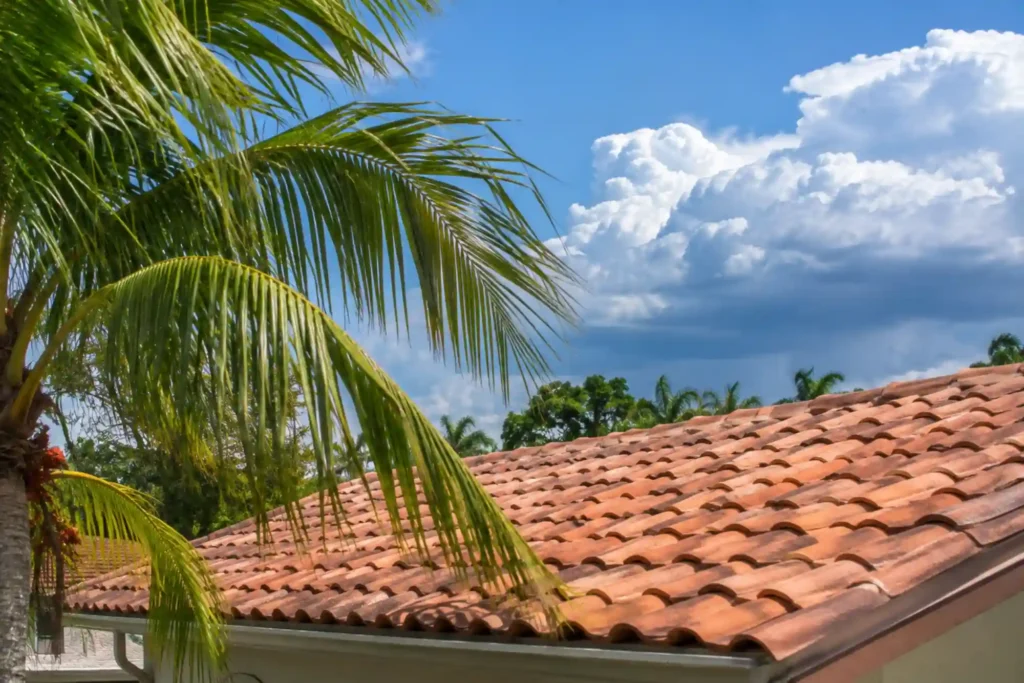
Lifespan numbers you find online are often national averages. They tend to run higher than what we see on a roof in Plantation, Hollywood or Boca Raton. Three things wear down a roof here faster than in most of the country: constant UV exposure, humidity that never lets up, and wind loads from tropical storms and hurricanes. A tile that does fine in Georgia can age differently after fifteen years of Florida sun and salt air.
The tile itself is also only part of the story. The underlayment, the battens or adhesive foam holding each tile, and the flashing around vents and valleys all have their own service life. That life is usually shorter than the tile’s. We will come back to this, since it is one of the biggest factors in how long a tile roof performs.
Clay vs concrete tile costs
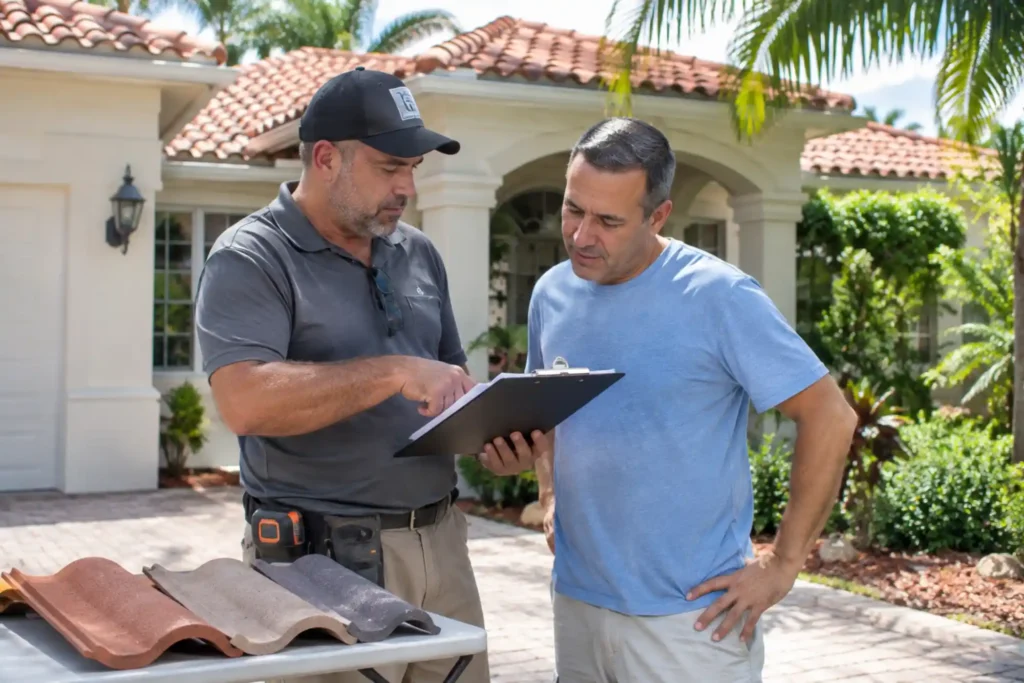
The cost of clay vs concrete tile comes down to three numbers. Those are material cost per square, installation labor, and how many times you replace the roof over time. Clay tends to run higher on the first two and lower on the third. Concrete usually runs lower on the first two and even or slightly higher on the third, depending on maintenance.
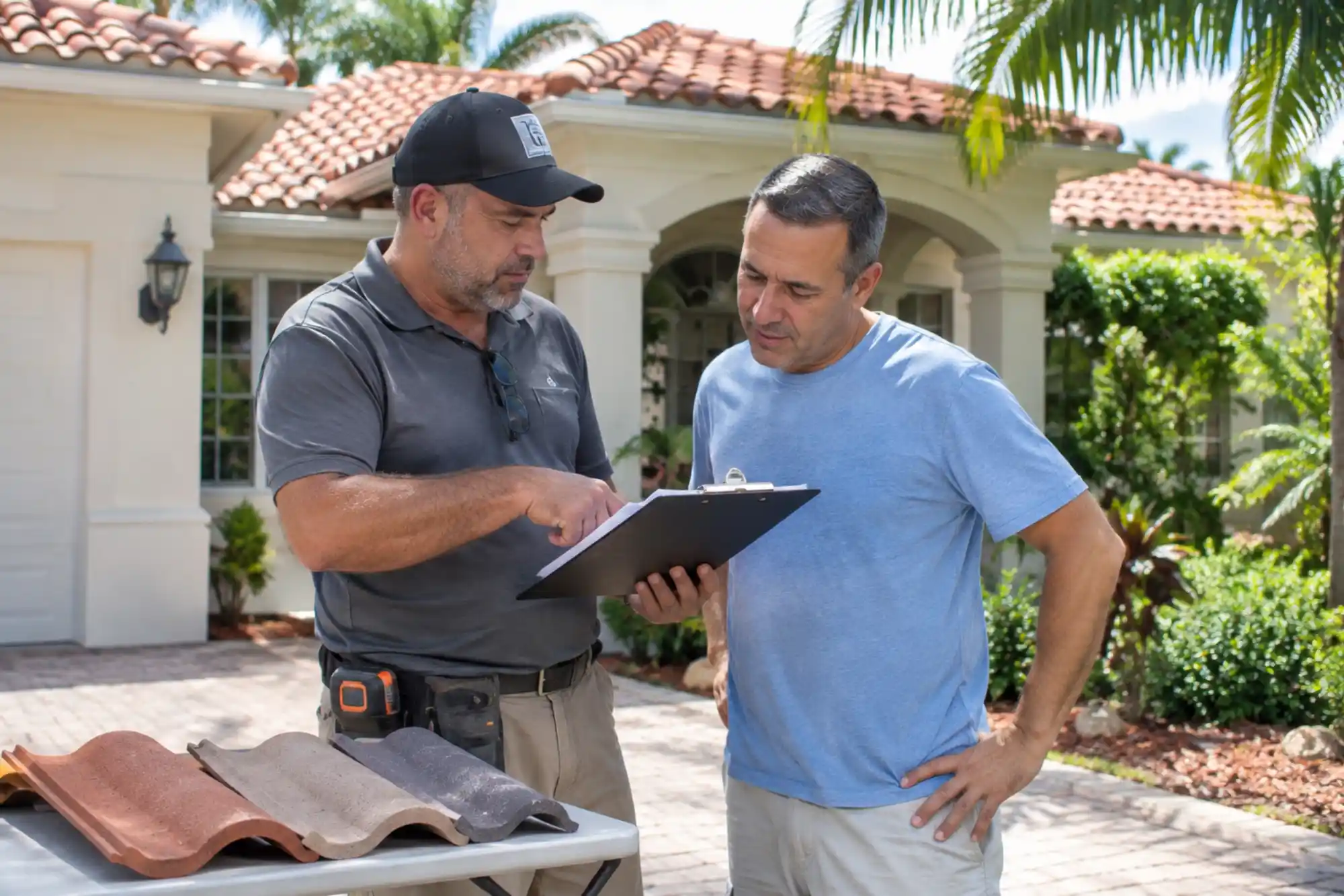
Weight is the other factor worth knowing before you pick a tile. Both materials are heavy compared to shingle or metal roofing. Your contractor should confirm that your home’s structure can carry that load before quoting either option. Clay tile generally runs lighter per square than concrete, though exact weight depends on the profile and manufacturer. A structural check is worth doing either way.
Maintenance differs more than most homeowners expect. Concrete tile benefits from periodic washing to remove algae and efflorescence. Many owners also recoat it around fifteen to twenty years in to restore the color and add protection. Clay generally needs less of this upkeep, since there is no surface coating to maintain. That narrows the real cost gap between the two materials over several decades.
Installation matters more than material
Both clay and concrete tile can meet South Florida’s high velocity hurricane zone requirements. The material is not what decides how the roof performs in a storm. The installation method does: whether the tile is mortar set, fastened with battens, or set with foam adhesive. The quality of the underlayment beneath it matters just as much.
A concrete tile roof installed correctly for its wind zone will outperform a poorly installed clay tile roof, and the reverse is just as true. This is the part homeowners get backwards when they compare clay vs concrete tile online. They assume the tile type determines hurricane performance. In practice, the contractor’s installation method and the underlayment quality do most of that work.
Permitting plays into this too. Any tile reroof in Miami-Dade, Broward or Palm Beach County needs to meet current Florida Building Code wind requirements for that zone. Your contractor should pull the permit and schedule the required inspections as part of the job. A permitted, wind rated tile roof can also factor into wind mitigation credits on your homeowners insurance. Ask your insurance agent about those credits once the job is closed out.
What really determines roof lifespan
A few things decide how long your tile roof lasts, and they matter more than the clay vs concrete tile decision on its own.
The underlayment usually fails before the tile does. Most tile roof problems we find in South Florida start with the underlayment breaking down. A quality synthetic or modified bitumen underlayment typically needs replacement between 20 and 30 years in. Both clay and concrete tile last well beyond that. This is why a tile roof that looks fine from the ground can still need underlayment work.
Maintenance habits add or subtract years. Concrete tile benefits from a wash every few years and recoating down the line, as covered above. Clay needs less routine attention but still benefits from a periodic inspection to catch cracked tiles before water gets underneath them.
Installation quality decides almost everything else. Cracked or slipped tiles let water through long before the tile itself would have failed. Someone walking the roof during a solar install, satellite dish repair or gutter cleaning often causes that damage. Flashing around chimneys, skylights, vents and valleys is a common failure point with either tile type. Flashing is usually metal and has a shorter service life than clay or concrete. Replacing worn flashing during a routine roof repair visit costs far less than fixing water damage from a leak nobody noticed.
Signs your tile roof needs attention
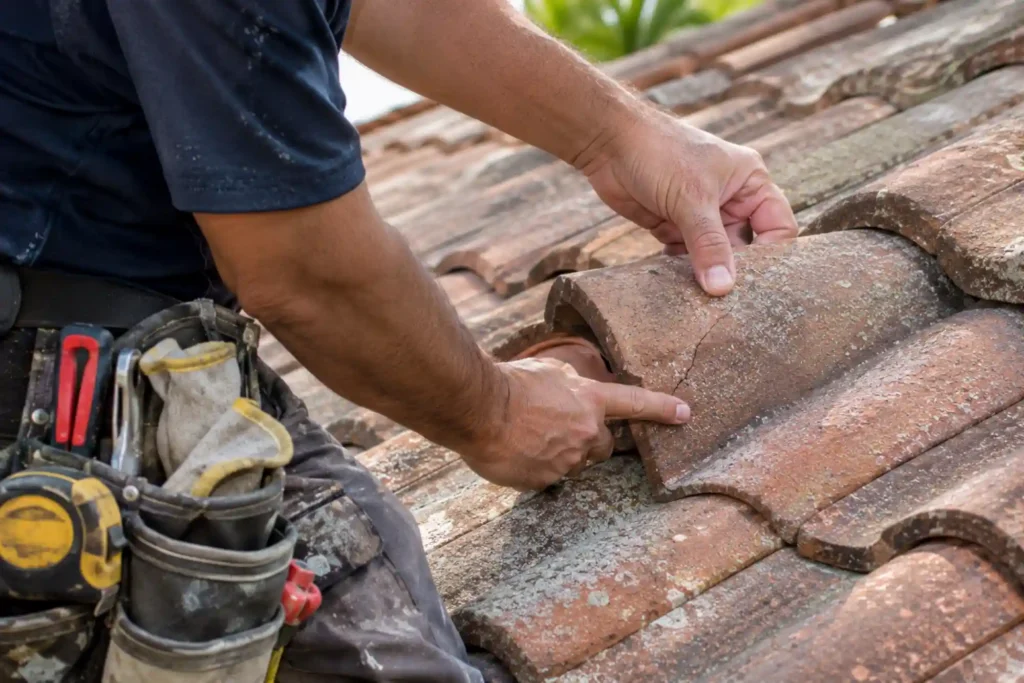
A few warning signs apply to both clay and concrete tile roofs. Catching them early is usually the difference between a repair and a much larger bill. Cracked, slipped or missing tiles are the most common issue we find, and they are often invisible from the ground. That is why a roof inspection matters more than a quick look from the driveway.
Surface wear shows up differently on each material. On concrete, watch for patches where the color has worn through to gray concrete, usually on sun facing slopes first. On clay, since the color runs through the whole tile, look for chipping or spalling at the tile edges instead.
Inside the house, watch for brown ceiling stains, musty attic odors, or a slow rise in your energy bills. Those signs can point to moisture getting past the underlayment even when the tiles look fine. Sagging in the roofline is more serious and should get a same week inspection.
Choosing clay or concrete tile
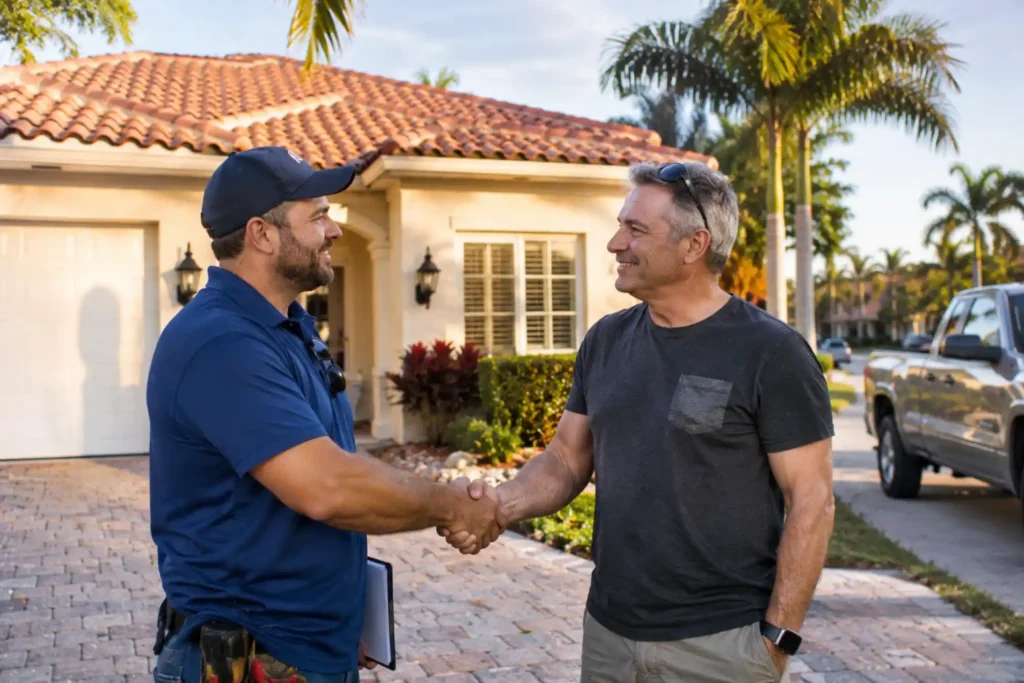
If you plan to stay for decades and want the longest lifespan with the least maintenance, clay tile is usually the better long term investment. That assumes your budget supports the higher upfront cost. Clay also tends to hold its resale appeal in neighborhoods with Mediterranean and Spanish style homes, which are common across South Florida.
Concrete tile is a solid, well proven choice if you want the tile look and strong wind performance at a lower cost. Expect periodic cleaning and an eventual recoat. It is also more common on larger commercial and HOA reroof projects, where upfront budget usually carries more weight than an extra decade of service life.
Property managers and HOA boards in Fort Lauderdale, Davie, Pembroke Pines, Aventura, Miami, Boca Raton or West Palm Beach should factor financing into a multi building reroof. Spreading a larger clay tile investment across a financing term can make the long term cost advantage work on a tighter annual budget. We work with roof financing partners for this kind of project, and we can write a scope that a board can vote on.
Frequently asked questions
Clay vs concrete tile: which lasts longer in South Florida?
Clay tile typically lasts 50 to 100 years here, while concrete tile typically lasts 30 to 50 years, assuming correct installation and basic maintenance on both.
Is clay or concrete tile better for hurricane resistance?
Both can meet South Florida’s high velocity hurricane zone wind requirements when installed correctly. The fastening method and underlayment matter more for wind performance than whether the tile is clay or concrete.
Why does my concrete tile roof look chalky or faded?
That is efflorescence and UV fading, a normal part of how concrete tile ages in a hot, humid, sun heavy climate. It does not mean the roof is failing, though a wash or recoat can restore the appearance.
How often should a tile roof be inspected in South Florida?
We recommend an inspection every two years for either material, and after any major storm. Cracked or slipped tiles are the most common way water gets underneath a tile roof.
Does clay or concrete tile cost more to install?
Clay typically costs more for both material and labor, since the tiles are brittle and crack more easily during a careless installation. Concrete generally costs less upfront, which is why it remains the common choice for budget conscious reroofs.
Can I switch from one tile type to another when I reroof?
In most cases yes, as long as your roof structure can carry the new material’s weight. Your contractor should verify that before the quote. Switching from concrete to clay is more common than the reverse, usually because the owner wants the longer lifespan.
Clay and concrete tile can both deliver decades of protection on a South Florida home or commercial building. They age differently, cost differently, and suit different budgets and timelines. If you want a straight answer on clay vs concrete tile for your property, we will come look at your current roof. We will talk through your budget and how long you plan to stay, then give you real roof replacement numbers instead of a sales pitch.
Victory E&I Roofing is a licensed Florida roofing contractor, license CCC1333273, based in Plantation. We have served Miami-Dade, Broward and Palm Beach counties for more than 25 years. Homeowners, HOAs and commercial property managers hire us to install and repair clay tile, concrete tile, shingle, metal and flat roofing. Our service area includes Fort Lauderdale, Davie, Pembroke Pines, Aventura, Miami, Boca Raton, West Palm Beach and surrounding areas, with financing for qualified projects. Call us at (954) 626-0667 or request a free estimate, and we will schedule an inspection.